Every trip has a story behind it, and ours began with a simple plan between three friends - me, Sandy, and Kanti. Over endless chats, we kept talking about the one place we had always dreamed of visiting - Kaziranga National Park, the land of the one-horned rhinoceros. The excitement was real, but nothing compared to the morning we actually set out.
The 4 AM Wake-Up
The alarm rang at 4 AM, but honestly, none of us were really asleep. The anticipation had already kept us awake. Half-asleep yet bubbling with energy, we packed our bags, checked our cameras, and rushed out. The cold morning breeze carried with it the promise of adventure. For us, the real race was not just spotting the rhino, but being among the first in line for the safari vans.
We hurried to the boarding point, whispering jokes and urging each other to move faster, like school kids afraid of missing the bus. Finally, we managed to secure the front jeep - the prized spot for a clear view of the wilderness ahead. Sitting there with Sandy and Kanti, hearts pounding, I felt like a child waiting for a curtain to rise on a grand performance.
The jungle is large, and the animals have a right to live in it. Man must learn to live with them, not against them
- Jim Corbett
The First Glimpse of the Rhino
The safari jeep rumbled softly over the dew-soaked trail, its wheels crunching against the damp earth. Tall elephant grass swayed gently in the cool morning breeze, and the rising sun spilled golden light across the vast plains. The forest felt alive yet hushed — as if nature itself was holding its breath.
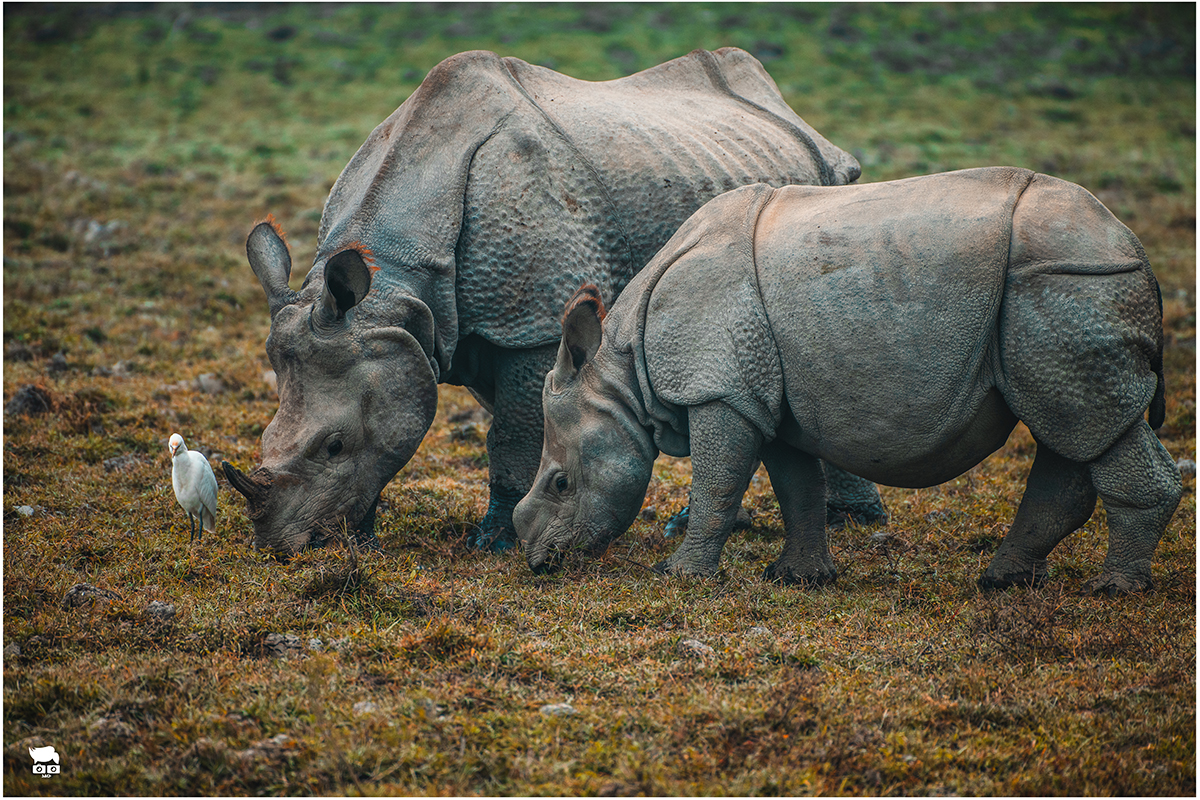
And then, almost like a curtain lifting, the grass parted. Out stepped a one-horned mother rhinoceros, her thick, armor-like skin glistening in the soft light. Close beside her, a calf - smaller, curious, and tender - walked in perfect rhythm with her. Together, they bent their massive heads to the ground, pulling up fresh grass with unhurried calm.
For a long moment, I simply watched in silence. The calf would pause between mouthfuls, raising its head to glance around, ears flicking, eyes wide with innocence. The mother, steady and composed, kept grazing, her presence protective yet serene. It was a rare sight - not just a wild animal, but a glimpse into the gentle, nurturing side of the wilderness.
The morning sun touched the mother’s horn, making it glow like a crown. In that golden light, she seemed more than just a creature of the wild - she was a symbol of Kaziranga itself: ancient, resilient, and eternal. And beside her, the calf stood as a promise of continuity, a reminder that life here endures against all odds.
That moment was more than a sighting; it was an experience etched into memory. To witness the bond of a mother and her young, framed against the grandeur of Kaziranga at dawn, felt like stepping into a sacred chapter of nature — one that few are privileged to read.